
SLP THERAPY
Helping children find their way to communicate.
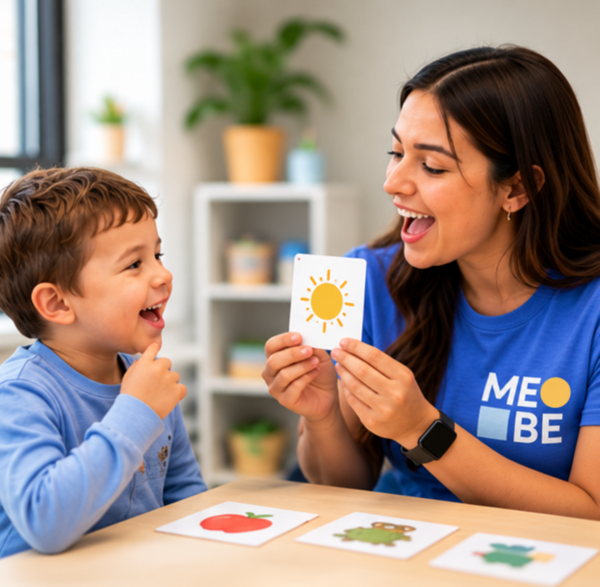
Speech-language therapy helps children understand others, express themselves, produce sounds, and use communication to connect with the people around them. MeBe’s Speech-Language Pathologists determine how each child communicates today and build from there—whether that means spoken language, gestures, pictures, or AAC.
COULD SPEECH THERAPY HELP?
Is Speech Therapy Right for My Child?
Speech therapy can be helpful for a variety of reasons, from developing speech and language skills to strengthening communication, social interaction, and confidence in everyday life. A formal diagnosis is not required to explore speech therapy for your child.
Expressive Language
Uses fewer words or sentences than expected.
Communicating Needs
Has trouble expressing what they want, think, or feel.
Speech Clarity
Is difficult for familiar or unfamiliar listeners to understand.
Understanding Language
Has difficulty understanding questions, directions, or conversations.
Social Communication
Struggles to begin, continue, or participate in conversations with others.
Alternative Communication
May benefit from a communication system in addition to or instead of spoken words.

UNDERSTANDING SPEECH THERAPY
What Is Speech Therapy?
Speech-language therapy addresses how children understand, produce, and use communication.
A Speech-Language Pathologist (SLP) evaluates the specific reason communication is difficult and develops treatment accordingly. That might mean helping a child understand language, put thoughts into words, pronounce sounds more clearly, communicate socially, or use an augmentative and alternative communication system.
Speech therapy is specifically about communication—helping a child understand messages and develop an effective way to share their own.
AREAS OF FOCUS
What Can Speech Therapy Help With?
Speech therapy helps children find new ways to communicate, connect with others, and express themselves, focusing on their unique needs and what matters most to your family.
Expressive Language
Helping children express their thoughts, needs, experiences, and feelings through words, symbols, or other forms of communication.
Receptive Language
Strengthening comprehension of vocabulary, concepts, questions, instructions, and messages from other people.
Speech Sounds
Improving the production and sequencing of sounds so spoken messages can be understood more clearly.
Social Communication
Learning how communication changes depending on the person, setting, conversation, and social situation.
AAC
Augmentative and Alternative Communication uses pictures, symbols, or devices to help children express themselves.
Feeding & Oral-Motor Skills
Addressing clinical feeding concerns involving oral movement, chewing, swallowing, or other skills within the SLP’s scope of practice.
WHAT TO EXPECT
What Happens in Speech Therapy?
Speech therapy is built around your child’s unique communication needs and goals. Your speech therapist helps your child develop meaningful skills through engaging activities, celebrates their progress, and adjusts therapy as they grow and learn.
01
We discover how your child communicates.
The SLP evaluates how your child understands, expresses, and uses language to identify their communication needs.
02
We choose an effective communication pathway.
Treatment focuses on how your child communicates best, whether through speech or other methods.
03
We create opportunities to communicate.
Sessions use engaging activities that encourage children to express themselves and connect with others.
04
We target specific communication skills.
The SLP selects techniques based on the child’s individual communication profile and treatment objectives.
05
We monitor changes in communication.
Progress is measured by how well your child understands and communicates, with treatment adapting as skills develop.
06
We help families support communication.
Caregivers receive practical techniques for creating communication opportunities during naturally occurring interactions.
THE MEBE DIFFERENCE
Research-Based Care. Serious Fun.
Your child’s therapy should be clinically strong, deeply individualized, and engaging enough that learning feels like being a kid.
Personalized to Your Child
Care begins with your child’s individual strengths, needs, interests, and goals.
Serious Fun
Evidence-based therapy comes to life through engaging experiences designed for children.
Family Partnership
Families are part of the process, with practical support for carrying progress into everyday life.
Collaborative Care
When children receive multiple MeBe services, our teams work together.

PERSONALIZED SPEECH THERAPY
Speech Therapy Programs Designed Around Your Child
Speech therapy can focus on different skills and involve different levels of support. We’ll work with you to create a plan that fits your child’s needs and everyday life.
FLEXIBLE CARE
Where Can My Child Receive Speech Therapy?
Speech therapy can take place in different settings depending on your child’s needs, goals, and available services. Your MeBe team will help determine where therapy can best support your child’s learning.
Center-Based
A dedicated therapy environment designed for learning and skill development.
In-Home
Therapy delivered in the child’s home when available and clinically appropriate.
In-School
Support provided in the school setting to help children throughout their school day.
EXPERT CARE
Expertise Behind Your Child’s Care
Your child’s Speech Therapy care is provided by trained professionals working within a clinically supervised care team. Our clinicians bring specialized education, professional credentials, ongoing training, and evidence-based practices to the care they provide.
Your Speech Therapy Care Team
Speech Language Pathologists
Graduate-level professionals who have completed specialized speech-language pathology education, supervised clinical training, national certification requirements, and applicable state licensure requirements.
Speech Language Pathologist Leads
Experienced speech-language pathologists who mentor our therapists, stay connected with families, and proactively monitor progress and quality to help every child thrive.
FOR FAMILIES
Helpful Resources for Your Family
Have questions or want to learn more? Explore articles, videos, and webinars created to help families better understand therapy, development, and everyday ways to support their child.


Featured Blog Articles


